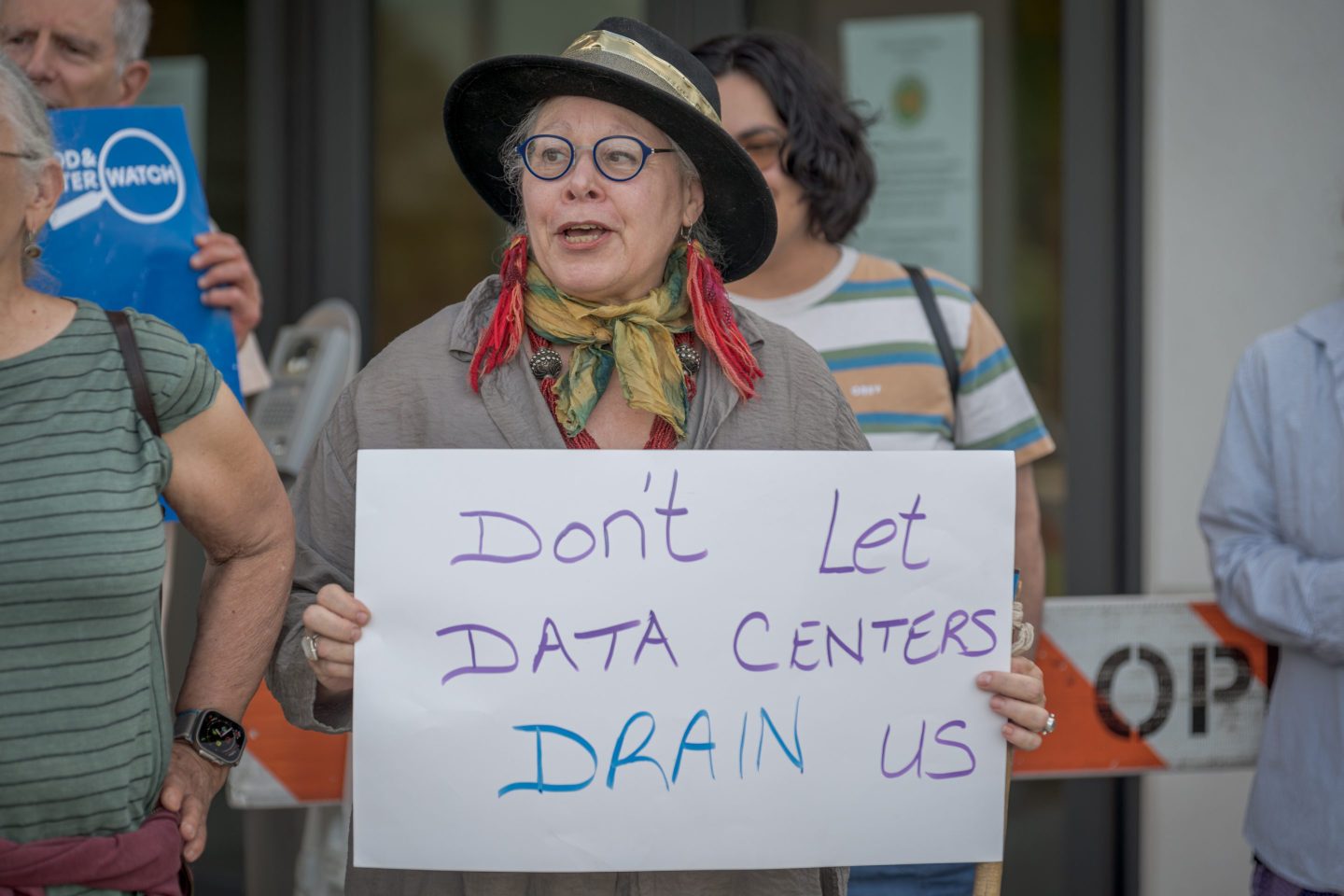
Data Center Opposition is Snowballing: Q1 2026 Setbacks Already Surpass All of 2025
The Tipping Point Has Arrived
A landmark report from Data Center Watch published this month reveals that opposition to data center construction has reached an unprecedented scale in the United States. In just the first three months of 2026, at least 75 data center projects worth more than $130 billion have been delayed or cancelled — matching the total number of setbacks across all of 2025.
Active opposition groups have more than doubled, surging from 396 at the end of last year to 833 by the end of March 2026, now spanning across 49 states. What was once scattered local resistance has become a nationwide movement.
"Opposition to data centers — it's now part of a mainstream conversation," Miquel Vila, lead researcher at Data Center Watch, told Fortune. "It's not anymore only the communities, not only anymore the neighbors that are being affected by a specific project. Now, this is part of the general narrative, general discourse, of American politics."
A Groundswell of Community Resistance
Earlier this year, Natelli Investments withdrew its annexation and rezoning applications for a proposed 190-acre data center campus in Wake County, North Carolina — six buildings, each roughly 70 feet tall, totaling 250 megawatts. The decision followed months of community protests, petitions, and packed public meetings over concerns about water use, air quality impacts, and rising utility costs.
"When they make infrastructure improvements, who does that cost go to? It doesn't go to the developer," resident Lorraine McAvoy told WRAL News. "It goes to the people, the consumers of the utility."
This story is no longer unique. The Data Center Watch report notes that in some communities, "opposition mobilized before any project was officially filed — the mere rumor of a data center was enough to trigger organized resistance."
Public Opinion Has Shifted Dramatically
A Heatmap Pro poll this month found that seven in 10 Americans now oppose data centers being built near their homes. The growing dissent is driven by mounting evidence of real harm:
- Studies project a 6% to 29% increase in wholesale electricity costs by the end of the decade due to data center expansion
- The environmental and public health costs of AI infrastructure growth could reach $25 billion annually
- JPMorgan Chase projects $5.8 trillion in global grid update investments over the next decade, with over $1 trillion needed in the U.S. alone
Legislative Action Across the Country
About a dozen states have introduced data center construction moratoriums. New York recently passed legislation putting a one-year pause on large data center permits. However, similar efforts in Maine and Oklahoma have failed, highlighting the patchwork nature of regulatory response.
In South Carolina, which has a Republican trifecta in power, a Republican-led bill to restrict tax incentives and subsidies for data centers is currently in the Ways and Means Committee — underscoring how opposition now cuts across party lines.
Major Organizations Join the Fight
The scale of opposition has grown beyond grassroots neighborhood groups. National heavyweights including Greenpeace, Friends of the Earth, and the NAACP have backed a 500-group coalition opposing unfettered data center construction under the banner "Stop Dirty Data Centers."
AI advocates like Kevin O'Leary, who is backing a $100 billion data center project in Utah, have claimed without evidence that opposition groups receive funding from Chinese entities. Experts at Data Center Watch say the opposition is entirely organic, and there is little evidence to support claims of foreign interference.
What's Next
These obstacles are not expected to halt all data center construction, but Vila suggests the fight is evolving. Future opposition may look less like town hall protests and more like hiring lawyers to challenge developers through the courts.
"If you scale the situation to a more ideological level," Vila said, "you have arguments on both the right and the left against AI, against data centers."
The cloud, it turns out, has a growing storm on the ground.
// DID THIS RESONATE?
CLICK TO SHOW YOUR SUPPORT
ORIGINAL SOURCE
Fortune