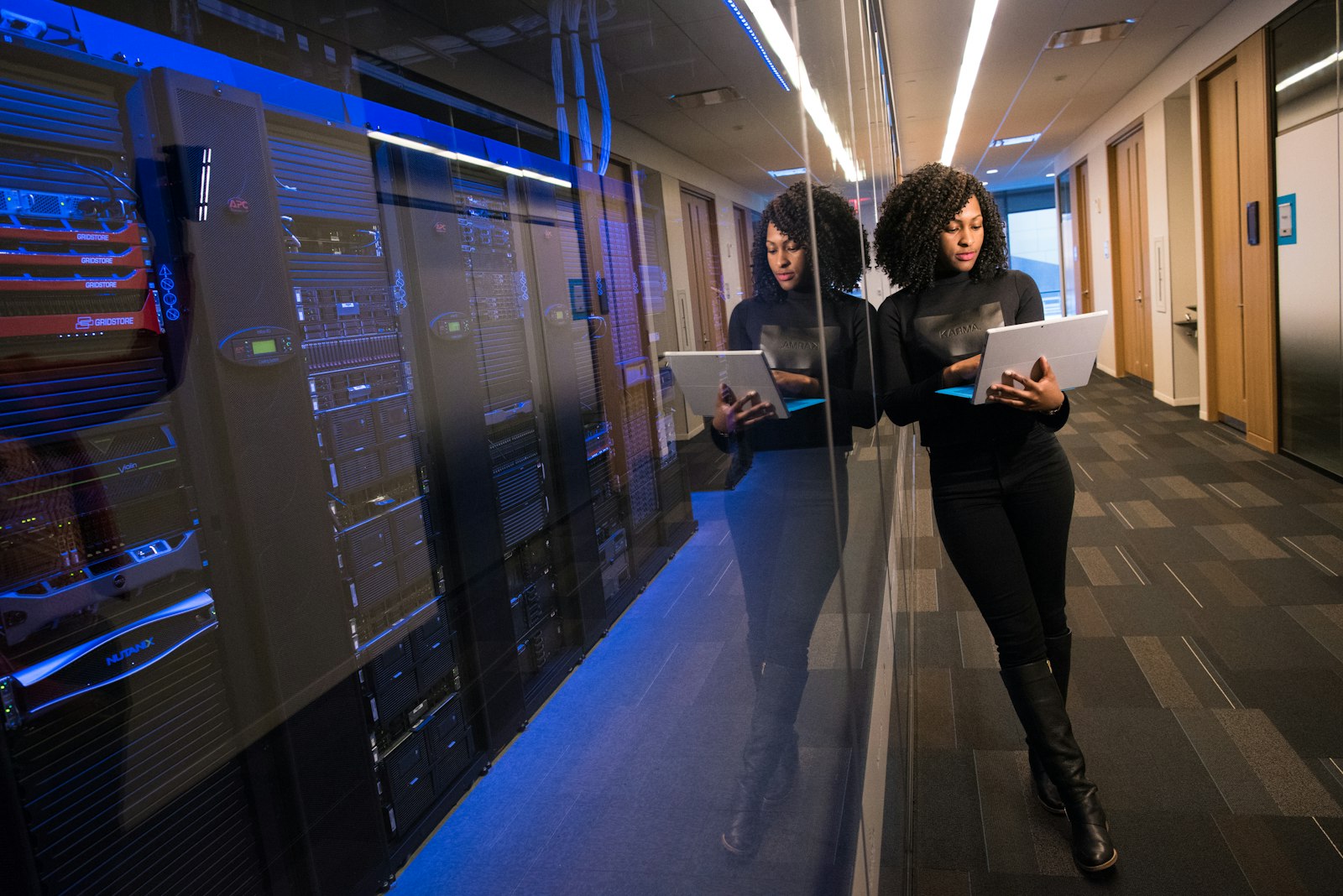
'Data Centers Are Amazing. Everyone Hates Them.': MIT Technology Review on the bipartisan backlash sweeping the nation
Data Centers Are Amazing. Everyone Hates Them.
SOURCE: MIT TECHNOLOGY REVIEW · PUBLISHED JANUARY 14, 2026
The hyperscale data center is a marvel of our age. A masterstroke of engineering across multiple disciplines. They are nothing short of a technological wonder.
People hate them.
So opens MIT Technology Review's sweeping deep dive into the bipartisan backlash against data centers now sweeping the nation — and the world. It's a piece that deserves to be read in full, because it captures, better than almost anything else published this year, exactly why communities from Virginia to Nevada to Georgia are rising up against facilities they never asked for and never consented to host.
The Marvel and the Monster
The article opens by describing what hyperscale data centers actually are: massive structures covering millions of square feet, built with millions of pounds of steel, aluminum, and concrete, featuring hundreds of miles of wiring connecting hundreds of thousands of high-end GPU chips — each costing upwards of $30,000 apiece — and chewing through hundreds of megawatt-hours of electricity. Their cooling systems alone are triumphs of engineering complexity.
So important are they, the article notes, that on his very first full day in office, President Trump stood side by side with the CEO of OpenAI to announce a $500 billion private investment in data center construction. You can make the case — and many have — that their construction is single-handedly propping up the U.S. stock market and the economy.
And yet: people hate them.
They Hate Them Everywhere
The Review catalogs the geography of resistance with precision:
- • Virginia — which leads the nation in data center construction, where Newport News residents rallied against a proposed facility near Fort Eustis.
- • Nevada — where an effort to block a Reno data center offered a glimpse of an increasingly thorny issue, and where facilities slurp up the state's precious water.
- • Michigan — where communities are fighting back.
- • Arizona — where a project rejected by Tucson and abandoned by Amazon moved forward anyway.
- • South Dakota — where the citizens of Sioux Falls hurled obscenities at their city councilmembers after a vote to permit a data center.
- • Worldwide — from Mexico to Ireland, the backlash is global.
But, the Review notes, they really hate them in Georgia.
Georgia: The Purple State United Against Data Centers
Georgia — "the purplest of purple states," home to both Stacey Abrams and Newt Gingrich — has become ground zero for the data center resistance. And the backlash is decidedly bipartisan.
Last year, the state's Public Service Commission election became unexpectedly tight and delivered a stunning upset to incumbent Republican commissioners. The central issue: skyrocketing power bills attributed to a data center building boom rivaled only by Virginia's.
The boom was no accident. In 2018, Georgia's General Assembly passed legislation giving data centers tax breaks for computer systems, cooling infrastructure, job creation, and property taxes. And then — boom. Georgia surpassed Northern Virginia in data center leasing.
Bolingbroke, Georgia: 900 People vs. 900 Acres
The Review's reporting centers on Bolingbroke, Georgia — population 492 — in Monroe County (population 27,954), where county commissioners were considering rezoning 900 acres of land for a new data center.
In nearby Twiggs County, despite strong and organized opposition, officials had already allowed a 300-acre data center to move forward. Public opinion, it seemed, was often irrelevant.
But at a packed meeting in Bolingbroke, some 900 people showed up to voice near-unanimous opposition, according to The Telegraph of Macon. Seeing which way the wind had blown, the Monroe County Commission shot it down in August 2025.
The would-be developers had claimed the site would bring millions of dollars to the county, be hidden from view, "uphold the highest environmental standards," and bring jobs and prosperity. Yet still, people came gunning for it.
Why Does Everyone Hate Them All of a Sudden?
The Review breaks down the logical reasons:
1. Power Bills
No one likes to see their power bills go up. The rate hikes come as monthly reminders that the eyesore in your backyard profits California billionaires at your expense, on your grid. In Wyoming, a planned Meta data center will require more electricity than every household in the state, combined. And while that added capacity benefits tech companies, the cost is shared by local consumers.
2. Environmental Devastation
To meet electricity needs, data centers often turn to dirty energy. xAI, for example, famously threw a bunch of polluting methane-powered generators at its facility in Memphis. Nuclear energy is often pitched as a cleaner solution, but traditional plants take a decade or more to build; even next-gen reactors will take years. And water usage — massive, variable, and often shrouded in secrecy — remains a flashpoint, with a growing number of states attempting to require disclosure.
3. Noise: "A Highway That Never Stops"
Data centers are noisy. A low, constant, machine hum. Not sometimes, but always. 24 hours a day. 365 days a year. "A highway that never stops."
4. The Jobs That Never Come
As for the jobs data centers bring to communities — the Review has bad news there too. Once construction ends, they tend to employ very few people, especially for such resource-intensive facilities. The promised prosperity rarely materializes for the host community.
The Emotional Truth: Silicon Valley's Buses, Revisited
But beyond the logic, the Review identifies an additional, emotional reason for the backlash — one that echoes a familiar history:
More than a decade ago, the large tech firms of Silicon Valley began operating buses to ferry workers to their campuses from San Francisco and other Bay Area cities. Like data centers, these buses used shared resources such as public roads without, people felt, paying their fair share — a visible symbol of inequality, of extraction, of a tech elite taking what it wanted and leaving the costs to everyone else.
Data centers, the Review argues, are the new buses. They consume shared resources — grid capacity, water, land, quiet — without paying their fair share, while enriching distant billionaires. The backlash isn't just about kilowatts and water tables. It's about a community's sense that it is being used.
Why This Matters Here
This is the throughline of everything documented on this site. Data centers are not just engineering marvels — they are extraction machines. They take power, water, land, quiet, and money from the communities that host them and convert it into computing power whose benefits flow almost entirely to a handful of the richest people on Earth.
The MIT Technology Review piece is essential reading because it makes clear what we've been documenting community by community: this resistance is not partisan. It is not NIMBYism. It is a rational, emotional, and increasingly organized response to being used.
If you're living near a data center — in Georgia, Virginia, Nevada, Michigan, Arizona, South Dakota, Wyoming, Memphis, or anywhere else — your story matters. Environmental advocate Erin Brockovich is tracking over 8,000 community reports of data center impacts nationwide at brockovichdatacenter.com. Submit your report there, and share your story on our community forum.
Because if 900 people in a town of 492 can stop a 900-acre data center, imagine what we can do together.
Sources & Citations
- • MIT Technology Review — "Data centers are amazing. Everyone hates them." (January 14, 2026; primary source)
- • MIT Technology Review — "The Download: next-gen nuclear, and the data center backlash"
- • CBRE — North America Data Center Trends (H1 2025)
- • Atlanta Journal-Constitution — Georgia PSC races and power bills
- • The Telegraph (Macon) — Twiggs County data center
- • Bolingbroke Tech — developer claims
- • McGuireWoods — Georgia surpasses Northern Virginia in data center leasing
- • Associated Press — Wyoming Meta data center electricity
- • NPR — How AI data centers could affect your power bill
- • Tennessee Lookout — xAI Memphis methane generators
- • MIT Technology Review — Nevada data center water usage
- • MIT Technology Review — Next-generation nuclear reactors
- • Reuters — Trump $500B AI infrastructure announcement
- • Wall Street Journal — Data center job creation reality
- • The Guardian — Michigan data center fight
- • The New York Times — Global data center backlash (Mexico, Ireland)
- • 13News Now — Newport News, VA residents rally
- • Nevada Current — Reno data center block effort
- • KJZZ — Tucson/Amazon Project Blue data center
- • MyKXLG — Sioux Falls city council tensions
- • Tom's Hardware — NVIDIA H100 GPU costs
- • Brockovich Data Center Registry — Erin Brockovich's nationwide impact map
- • YouTube — Data center noise documentation
- • YouTube — "A highway that never stops"
Source: MIT Technology Review · Published January 14, 2026 · Founded at the Massachusetts Institute of Technology in 1899
// DID THIS RESONATE?
CLICK TO SHOW YOUR SUPPORT
ORIGINAL SOURCE
MIT Technology Review