Brookings: Data Center Backlash Signals a Fight Over AI Power
Brookings: Data Center Backlash Signals a Fight Over AI Power
SOURCE: BROOKINGS INSTITUTION · BY TOM WHEELER · PUBLISHED JULY 7, 2026
"You don't have to be a weatherman to know which way the wind is blowing."
— Bob Dylan, 1965, cited by Tom Wheeler, Brookings
When the Brookings Institution — America's most influential policy think tank — publishes a piece titled "Data center backlash signals a fight over AI power," and it's written by a former Chairman of the Federal Communications Commission, the conversation has officially moved from the fringe to the center.
Tom Wheeler, who served as FCC Chairman from 2013 to 2017 and is now a Visiting Fellow in Brookings' Center for Technology Innovation, doesn't mince words. The data center backlash, he argues, isn't really about land use. It's about power — and whether that power will be exercised by democratic institutions or by the companies that control AI infrastructure.
The Numbers: $130 Billion Blocked in Three Months
The most striking figure in the piece comes from Data Center Watch: in just the first three months of 2026, local data center opposition blocked or delayed 75 projects worth $130 billion in planned construction. That's roughly the same number of projects affected as in all 12 months of 2025 combined.
The backlash is accelerating. And it's working.
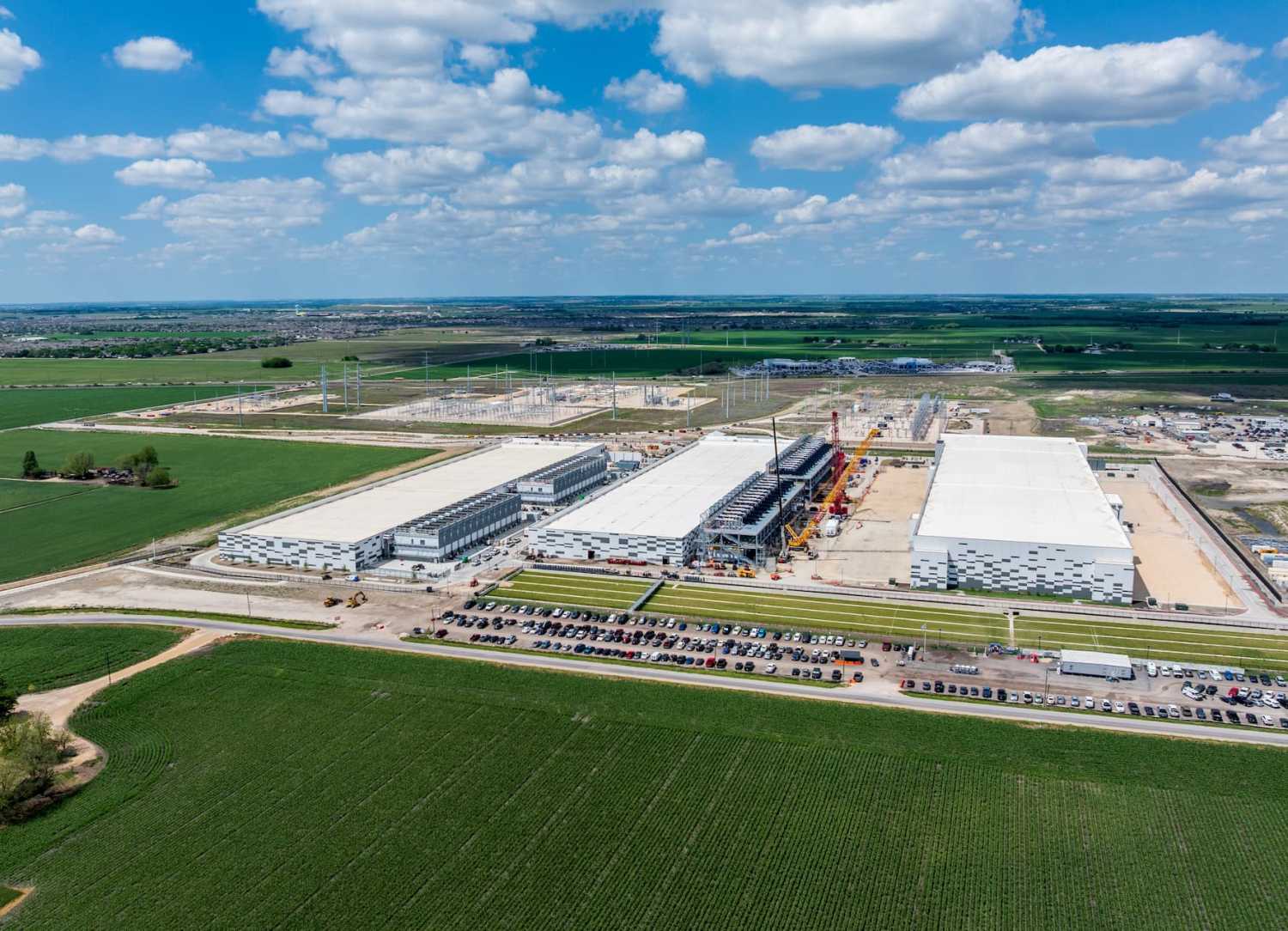
The article's cover image drives the scale home: an aerial view of the Skybox AI data center campus under construction in Hutto, Texas — a single facility that will host 400 million square feet of space with 600 megawatts of capacity. That's one campus. The power equivalent of a mid-sized city, dedicated to AI.
"Americans Don't Know How to Fight AI. So They're Fighting Data Centers."
Wheeler cites a Vox headline that captures the dynamic perfectly: "Americans don't know how to fight AI. So they're fighting data centers." He connects the land-use fights to a deeper public anxiety:
"AI mega centers have become the symbol of citizen frustration about AI. As the most visible manifestation of AI, they have become the proxy for citizen feedback on AI itself. The debate over land use also represents the crystallization of broader public concern about AI's effect on American lives and livelihood."
He cites a Reuters/Ipsos poll showing Americans are wary of the AI-driven data center boom, with concerns that rapid AI expansion could upend the labor market. The data center, in other words, is the physical manifestation of an abstract fear — and people are fighting what they can see.
The Political Money: $140 Million to Shape "Pro-AI Candidates"
Wheeler reveals the scale of the industry's political counteroffensive. A super PAC called Leading the Future was launched with reportedly $50 million from AI investor Andreessen Horowitz and $50 million from OpenAI president Greg Brockman — beginning with $140 million in its coffers for the purpose of "identifying, maintaining, and growing pro-AI candidates."
$140 million. To elect politicians who will let the industry build what it wants, where it wants, powered by what it wants, accountable to no one but its investors.
But there's pushback from within. The Guardrails Alliance, organized by rank-and-file employees of the dominant AI companies, is collecting small-dollar donations with a blunt message: "AI billionaires are buying our elections. We're fighting back." They advocate for establishing guardrails for AI development rather than relying on industry self-regulation.
The people who build the technology are warning us about the people who own it. That should tell you something.
Bipartisan Alarm: Hawley and Warren
Wheeler highlights that the concern crosses party lines — and quotes two senators from opposite ends of the political spectrum:
"We are watching a handful of companies assemble a concentration of capital, information, and political power without precedent in the American experience."
— Sen. Josh Hawley (R-Mo.)
"Today's big tech companies have too much power over our economy, our society, and our democracy. They've bulldozed competition, used our private information for profit, and tilted the playing field against everyone else."
— Sen. Elizabeth Warren (D-Mass.)
When a conservative Republican from Missouri and a progressive Democrat from Massachusetts are saying the same thing about tech concentration, the political ground has shifted. Wheeler frames the 2026 election as a referendum on this question: "How much economic, informational, and political power should be concentrated in a small number of technology firms?"
"Five Men Control AI. Who Controls Them?"
Wheeler closes by citing The Economist, which distilled the issue into a single question: "Five men control AI. Who controls them?" He argues that the AI era is too important to allow non-democratic decision-making to continue — the same handful of executives who shaped the social media era (and its harms) now seek to make the rules for computerized cognition.
"Social media was the first contact between A.I. and humanity, and humanity lost."
— Yuval Harari, New York Times, cited by Wheeler
The data center backlash, Wheeler argues, is the public's way of refusing to lose twice.
Why This Brookings Piece Matters
This is the third major establishment validation of the data center backlash in recent weeks — following The Economist's cover story and widespread coverage of community wins from McCormick County to Bolingbroke. But Brookings is different. Brookings doesn't just describe the backlash — it frames it as a legitimate, necessary democratic response to an unprecedented concentration of power.
Wheeler's argument is the one this site has been making since its founding: the data center fight isn't about NIMBYism. It's about whether the infrastructure of the 21st century serves the public interest or the interests of a few tech oligarchs. It's about whether communities have a say in what gets built in their backyards, or whether $140 million in super PAC money overrides them.
The backlash is working. $130 billion in delayed projects in three months. Bipartisan congressional alarm. A former FCC Chairman calling it a fight over democratic accountability. The industry is spending nine figures to fight back — which means they're scared.
If you're part of this fight — in Hutto, Texas, or McCormick County, South Carolina, or anywhere else — you're not alone, and you're not fringe. You're part of what Brookings now calls a fight over AI power. Environmental advocate Erin Brockovich is tracking over 8,000 community reports of data center impacts nationwide at brockovichdatacenter.com. Submit your report there, and share your story on our community forum.
Because the question isn't whether the wind is blowing. It's which way we let it blow.
Sources & Citations
- • Brookings Institution — Tom Wheeler, "Data center backlash signals a fight over AI power" (July 7, 2026; primary source)
- • TIME — AI elections and data center backlash (cited by Wheeler)
- • Reuters/Ipsos — Americans wary of AI-driven data center boom (June 11, 2026)
- • Vox — "Americans don't know how to fight AI. So they're fighting data centers."
- • Leading the Future — pro-AI super PAC
- • Guardrails Alliance — employee-led AI oversight group
- • The Economist — "Five men control AI. Who controls them?"
- • Brockovich Data Center Registry — Erin Brockovich's nationwide impact map
- • Related on this site: The Economist: America's data-centre backlash puts the AI boom at risk
Source: Brookings Institution · By Tom Wheeler · Published July 7, 2026
// DID THIS RESONATE?
CLICK TO SHOW YOUR SUPPORT
ORIGINAL SOURCE
Brookings Institution