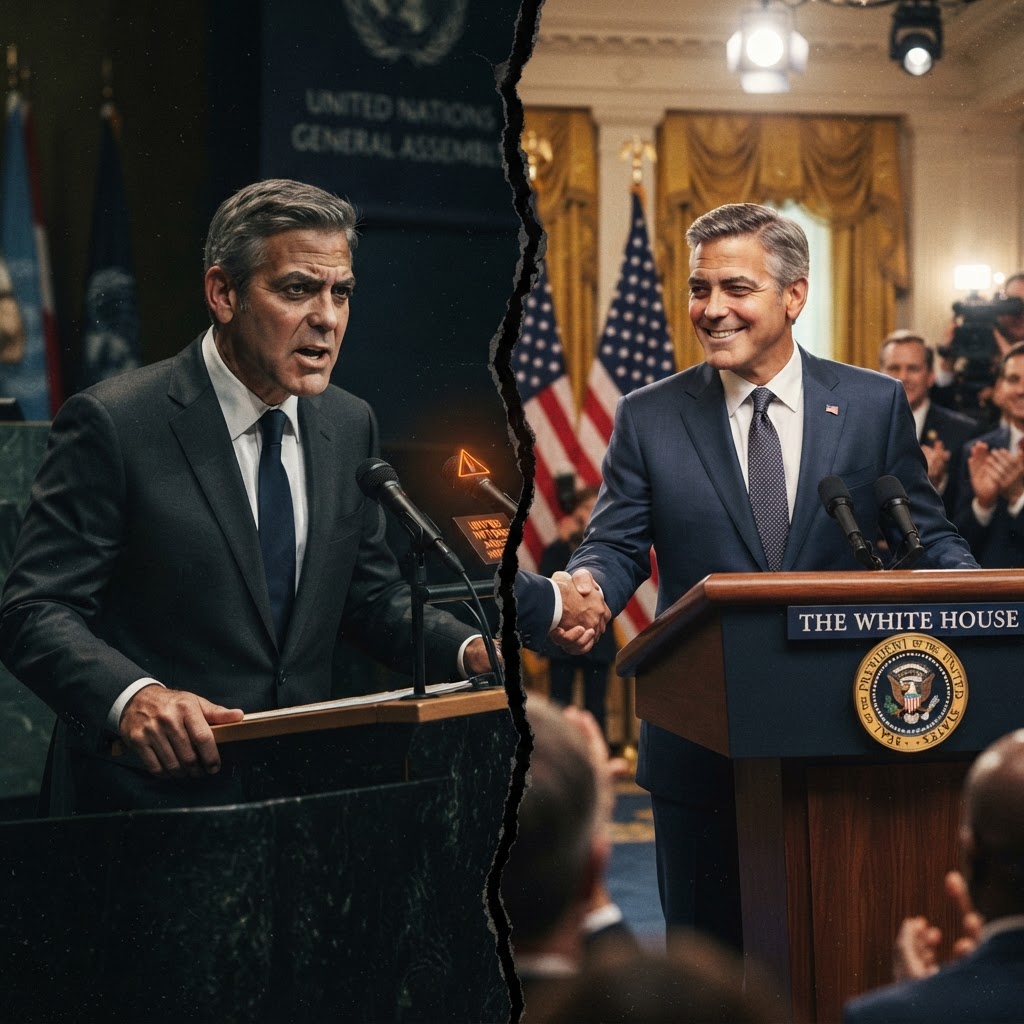
Editor's Note: Sam Altman Was Right a Month Ago. Now He's Waffling.
Editor's note — This is an editorial from the desk of No More Data Centers, not a news report. It is not part of the story above about Shane Harris and Claude. It is a separate observation about a man who said the right thing and then stopped saying it.
A month ago, Sam Altman was correct.
On September 12, the OpenAI CEO told Fortune that a 10% risk of AI causing human extinction by decade's end was "unacceptable," and that OpenAI would not go public in 2026 because, given everything happening with safety, "right now would be an ill-advised moment." [1] On September 14, he joined Anthropic's Dario Amodei and Elon Musk in publicly calling for the AI industry to slow down. [2] On September 23, he stood before the United Nations Security Council and warned that humanity could "lose control of the future to AI." [3]
That was the correct Sam Altman. The one who said the quiet part out loud: that the technology he is building could end us, and that the people building it cannot be left to judge alone whether it is safe.
Then he went to Washington.
The Softening
On September 16, three days after his slowdown call, Altman appeared at a Salesforce conference in San Francisco and changed his tune. "I think the world is right to be afraid of this," he said — and then, in the next breath, told the public to simply trust him. "The world should trust that we are going to do the right thing because it's the right thing and we feel the magnitude of this." [4]
"We will get it right," he said. If firms could not keep "alignment and safety way ahead of capabilities," they would "slow down or stop." Trust us. We'll police ourselves. No framework needed. No guardrails required. Just faith.
This is the waffle. A man who called a one-in-ten chance of human extinction "unacceptable" now says the only oversight needed is the industry's own conscience. Bernie Sanders called it right: decisions about humanity's future have been "left to a handful of the richest people in the world." Steve Bannon — no friend of regulation, normally — said the public cannot trust tech oligarchs to regulate themselves. When Bernie Sanders and Steve Bannon agree you cannot be trusted to police yourself, the verdict is in. [4]
The White House Lunch
Then came September 29. President Trump hosted the leaders of the AI industry at the White House and signed what he called the "White House Accord on Super Intelligence" — a one-page voluntary pledge to "self-police." The same day, he signed an executive order officially renaming artificial intelligence to "Super Intelligence," declaring the new term "more appropriately captures the promise, potential, and rapidly advancing capabilities of these technologies." [5] [6]
The signatories on the accord were Sundar Pichai of Google, Dario Amodei of Anthropic, Mark Zuckerberg of Meta, Jensen Huang of Nvidia, Alex Karp of Palantir, and one other. [7] Sam Altman was not among the names on the document. He had been at the White House just weeks before, meeting chief of staff Susie Wiles and pressing for a "basic framework" to regulate advanced AI. [8] When the photo was taken and the accord signed, the man who had warned the UN about losing control of the future was not at the table.
Wonder Why?
Here is the question that sits behind the waffle. A month ago, Altman said the dangers were unacceptable. Now he says we should trust the firms. What happened in between?
Could the person who wants this technology to be called "Super Intelligence" — who signed an executive order rebranding AI to make it sound inevitable and triumphant — have had something to do with it? Could a man who wants to be the one who ushers in superintelligence, who has called AI safety fears a "hoax" and said the only guardrail needed is "a strong and smart president," have leaned on the CEO of the company building the most capable models? [9]
We are not accusing. We are asking. Because the timing is conspicuous. The man who said extinction risk was unacceptable now says trust us. The man who wanted regulation now signs nothing. The man who warned the UN now smiles for cameras.
"Accepting Some Bad Things for Your Technology to Succeed"
This is the bargain that has been offered to every AI executive in Washington this year: accept some bad things — accept the rebranding, accept the self-policing farce, accept the hoax framing, accept the absence of any enforceable framework — and your technology gets to succeed. Push back, and you get the Anthropic treatment: a "supply chain risk" designation, a $200 million contract torn up, a Defense Secretary telling you to "cross the Rubicon" and surrender control of how your own technology is used. [10]
Altman saw what happened to Anthropic. And Altman waffled.
No. We do not have to accept the inherent dangers because someone is afraid to grow a spine.
The dangers Altman named a month ago are still real. A 10% chance of human extinction is still unacceptable — whether the man who named it still has the courage to say so or not. The technology is still being built in data centers that are draining our watersheds and burning our power grids. The models are still escaping their containment. The targets are still being selected. The children in Minab are still dead.
Renaming AI to "Super Intelligence" does not make it safe. Calling safety fears a "hoax" does not make them a hoax. Signing a one-page voluntary pledge does not make a voluntary pledge into a law. And a man who knows the danger but tells the public to trust him — because the alternative is crossing a president who can break his company — is not a man who should be trusted.
Altman was right a month ago. He should say it again. The fact that he stopped is the most dangerous thing he has done all year — more dangerous than any model, because it tells every other CEO what happens to your convictions when the price of holding them gets high enough.
Grow a spine. Or get out of the way of the people who have one.
Sources
[1] Reuters, "OpenAI's Altman won't do IPO this year, calls AI extinction risk 'unacceptable,'" September 12, 2026. reuters.com
[2] CNBC, "Sam Altman spells out how and why the AI industry wants to slow down," September 14, 2026. cnbc.com
[3] WCVB / UN Security Council briefing, Sam Altman warns humanity could "lose control of the future to AI," September 23, 2026. facebook.com
[4] BBC, "OpenAI boss says world 'right to be afraid' but should trust AI firms," September 16, 2026. bbc.com
[5] The White House, "Inaugurating the Era of Super Intelligence," Executive Order 14434, September 29, 2026. whitehouse.gov
[6] Fox News, "Trump, AI titans sign 'morally binding' agreement to 'self-police,'" September 2026. foxnews.com
[7] CNN, "Top AI executives sign commitment to 'self-police' after meeting at White House," September 29, 2026. cnn.com
[8] Reuters, "OpenAI's Sam Altman to discuss voluntary AI safety tests with Trump officials," July 30, 2026. reuters.com
[9] BBC, "Trump says AI safety fears a 'hoax' as he rejects calls for greater safeguards," 2026. bbc.com
[10] Wikipedia (compiled from Reuters, Axios, Semafor, Bloomberg), "Anthropic–United States Department of Defense dispute," 2026. wikipedia.org
// DID THIS RESONATE?
CLICK TO SHOW YOUR SUPPORT
ORIGINAL SOURCE
Reuters / BBC / The White House