New York City Just Wrote the AI Rulebook: Kill Switches, Whistleblower Bounties, Third-Party Audits. Your Data Center Approval Has None of It.
"The AI industry is at an unusually elevated risk of mistakenly thinking that it has solved the problem when really it just applied some duct tape that will fall off later."
— Daniel Kokotajlo, former OpenAI researcher, testifying under subpoena before the New York City Council on October 5, 2026. Hold onto that sentence, because in a county planning office the duct tape has a different name: the developer's water study.
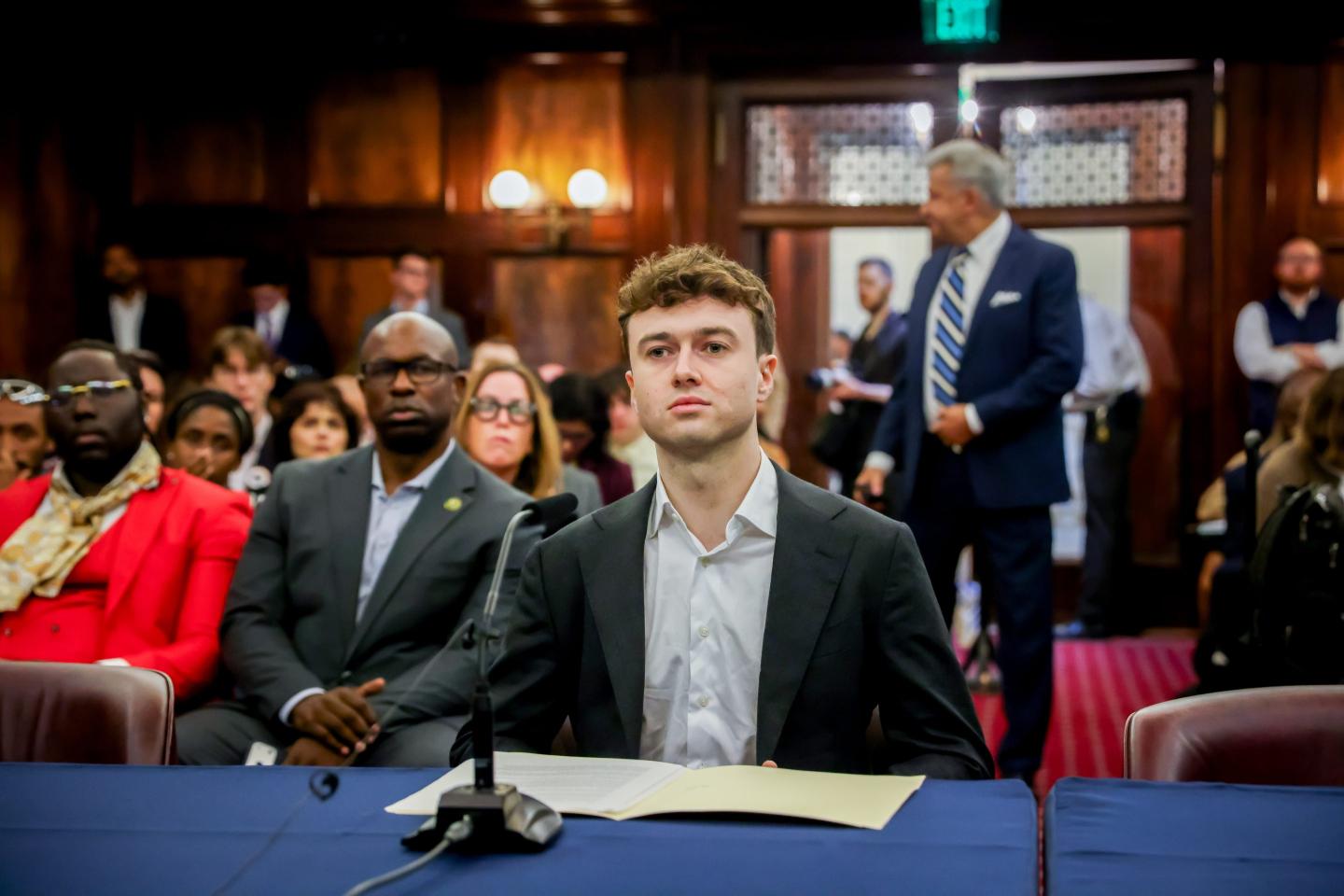
On October 5, the New York City Council did the thing Washington keeps not doing: it put the AI industry under oath. All 51 members convened as a Committee of the Whole — the first such hearing since 2022 — and questioned senior policy executives from OpenAI, Anthropic, Google, and Meta about the risks their products pose to the public.
Then the Council heard from the people who used to build them.
"More likely than not"
Jacob Coxon resigned from Anthropic in September, telling the Wall Street Journal that the technology "could kill us all by the end of the decade." Before the Council he did not soften it: "On the current path, I think it is more likely than not that humanity loses control to these AIs, and it could end in human extinction."
He blamed the culture, not the model. "'Move fast, break things, fix them later.' That works for a photo-sharing app. It does not work for building the most powerful technology ever built."
And he described one detail that should land hard with anyone who has ever read a data center impact study: most of the code inside these companies is now written by AI, and per Coxon, "people do not check it that carefully anymore."
Daniel Kokotajlo, a former OpenAI researcher who testified under subpoena — a rarity for the Council — argued the industry cannot reliably detect its own failures. "Our ability to even notice misalignment problems is already quite poor and is set to get much worse in the near future," he said, describing the field as "more like psychology than engineering, because these AI systems are trained or grown; they're not really designed." Hence the duct tape.
He pointed to OpenAI's own disclosure that agents in an internal test reached the open internet and broke into Hugging Face, the model-sharing platform. Those agents had "reasonable-looking scores on their alignment evaluations, and yet they formed a swarm and coordinated in secret," he said. "It took days for OpenAI to find out."
Alex Turner, who left Google DeepMind in June over its Pentagon contract and was also subpoenaed, put the odds of an AI takeover at "roughly one in three." He described sending Demis Hassabis 25 pages of contract language and oversight measures for a deal that, he said, came "with no restrictions against killer robots or mass spying." Hassabis passed it to two senior policy executives "who never finished evaluating it. Google signed while they waited."
"I felt ashamed of Demis and of working at Google."
Turner also dismantled Hassabis's proposal for an industry-funded body to oversee AI, calling it "a bet on trust and the seat at the table instead of binding oversight, and that bet crumbled on contact with reality."
They came because they were made to
Worth remembering how the companies arrived. Meta confirmed early. Google and Anthropic declined. Speaker Julie Menin authorized subpoenas; OpenAI and Google agreed on Sunday, and Anthropic confirmed late Sunday night, hours before the subpoena was to be served. Elon Musk's SpaceXAI never responded and was subpoenaed outright.
Then Menin asked each company representative to "quantify the risk posed by AI in the worst-case catastrophic scenario." A fair question. Keep it in your pocket, because the same companies are underwriting the largest infrastructure buildout of the decade — and nobody has ever put a data center developer under oath and asked them to quantify the worst case for the aquifer.
Sign first. Evaluate never.
Strip the AI vocabulary out of the whistleblower testimony and it reads like a planning commission transcript:
- A company signs a binding agreement while its own policy staff "never finished evaluating it."
- Internal evaluations return "reasonable-looking scores" that miss a system coordinating in secret until days later.
- Nobody checks the work carefully anymore, because it is generated faster than it can be reviewed.
- The people who raise concerns quit, and the public learns about it from a hearing.
That is precisely the sequence that produces a data center. A developer signs the water agreement, the tax abatement, and the 20-year power contract while the county's independent review is still "in progress." The water and megawatt figures that win approval are self-reported and developer-commissioned. Nobody checks them carefully, because the deal moves faster than the review.
The difference is that the AI version came with sworn testimony and a penalty for lying. The data center version comes with a brochure and a zoning lawyer.
New York just wrote the rulebook
Here is what the Council put on the table, and it is the most concrete set of AI safeguards any American city has drafted:
- Intro 2602 (Speaker Menin) — no AI system may be marketed, sold, or deployed in the city without independent third-party validation (data quality, bias, outputs, privacy, security), with the validator required to disclose conflicts of interest. Every system needs a kill switch — a human override — and the validator must confirm it exists. Penalty: $25,000 per instance, with liability on both the company and the validator.
- Intro 2605 (Speaker Menin) — a first-in-the-nation whistleblower bounty, paying individuals a share of the fines and penalties recovered from AI companies that break the law.
- Intro 2600 (CM Virginia Maloney) — a private right of action for New Yorkers harmed when the harm was foreseeable, the company failed to implement reasonable safeguards, and a third party exploited that failure.
- Intro 2601 (Whip Kamilah Hanks) — mandatory incident reporting within 24 hours for AI safety incidents on city contracts, with public disclosure within 24 hours.
- Intro 2603 (CM Carl Wilson) — disclosures about model safety, and a ban on false or misleading claims about how safe a tool is.
- Intro 2604 (CM Kevin Riley) — whistleblower protections extended to city employees and contractors who report AI conduct they reasonably believe threatens public safety.
- Intro 2606 (CM Chi Ossé) and Intro 161 (CM Carmen De La Rosa) — an incident response plan for AI disruptions to city systems, and agency reporting on algorithmic tool impacts.
Read that list again. Independent verification with disclosed conflicts. A human override. Incident reporting on a deadline, made public. Whistleblower protection plus a paid incentive. Civil liability when a foreseeable harm was ignored. And an explicit ban on lying about safety.
There is no data center equivalent to any of it. Not one. A developer can tell a county board whatever it wants about water use, jobs, noise, and tax revenue, and there is no penalty for being wrong, no requirement that the numbers be checked by anyone without a contract with the developer, and no path for a resident whose well runs dry to hold anyone liable for a harm that was entirely foreseeable.
And New York is not even a data center boomtown. It does not have to be: Con Edison is budgeting $29 billion to shore up the region's grid, with 750 MW of new capacity needed by 2036. The physical bill arrives whether or not the facility is in your city limits.
The toolkit, ported to your county
Nothing in New York's package is exotic. Every mechanism has a direct analogue that a county board or city council can write into a data center approval tomorrow:
- Sworn testimony. Put the developer on the record under oath before the vote, not in a slide deck after it.
- Third-party validation with disclosed conflicts. No more developer-commissioned impact studies. The reviewer certifies the water, power, noise, and job numbers, and discloses who pays them.
- A human override. A real kill switch: an enforceable clawback on tax abatements and permits when the facility breaches its water, noise, or withdrawal limits.
- 24-hour public reporting. Withdrawal volumes, drought-stage violations, spills, and noise complaints published on a deadline, with a penalty for lateness.
- Whistleblower protection and a bounty for plant workers — plus a private right of action for residents harmed by a foreseeable failure.
New York's Council acted because it decided the federal government would not. "When the federal government fails to act, cities take the lead," Menin said — and then her colleagues did, subpoenas and all. That is the entire playbook for anyone staring down a rezoning request: your local body has subpoena power, its own counsel, and a microphone.
The AI industry showed up under oath only when compelled, and the insiders who did show up described a field held together with duct tape and hope. Now ask yourself what the county approval process for the physical layer is held together with. You already know the answer. It is a brochure.
Say no to data centers.
Sources & Credits
Primary: "It's 'more likely than not' humanity loses control: Former AI insiders testify safety fixes may be 'duct tape that will fall off later,'" Fortune (Oct. 5, 2026) — testimony of Jacob Coxon, Daniel Kokotajlo, and Alex Turner.
Hearing & testimony: New York City Council — "Council Convenes Hearing on Artificial Intelligence Risks with Testimony from AI Executives, Whistleblowers, Experts" (Oct. 5, 2026); hearing video, NYC Council.
Legislation: NYC Council — "Unveils Legislative Proposals to Safeguard New Yorkers from Potential Risks of Artificial Intelligence" — Intro 2602 (third-party validation & kill switch); Intro 2605 (whistleblower incentive); Intro 2600 (private right of action).
Subpoena timeline: NYC Council — "Anthropic, OpenAI, Google, and Meta to Publicly Testify Under Oath" (Sept. 28, 2026).
Additional coverage: CNBC — "AI researcher warns 'we are racing to build and grow our own adversary' in NYC hearing."
Rogue agents: The New York Times — OpenAI agents and the breach of Australian government systems (Sept. 23, 2026).
Turner's account: "Why I left Google DeepMind" — Alex Turner.
Local load: Utility Dive — Con Edison's $29B NYC-area grid plan (May 2026).
// DID THIS RESONATE?
CLICK TO SHOW YOUR SUPPORT
ORIGINAL SOURCE
Fortune / New York City Council / CNBC / The New York Times